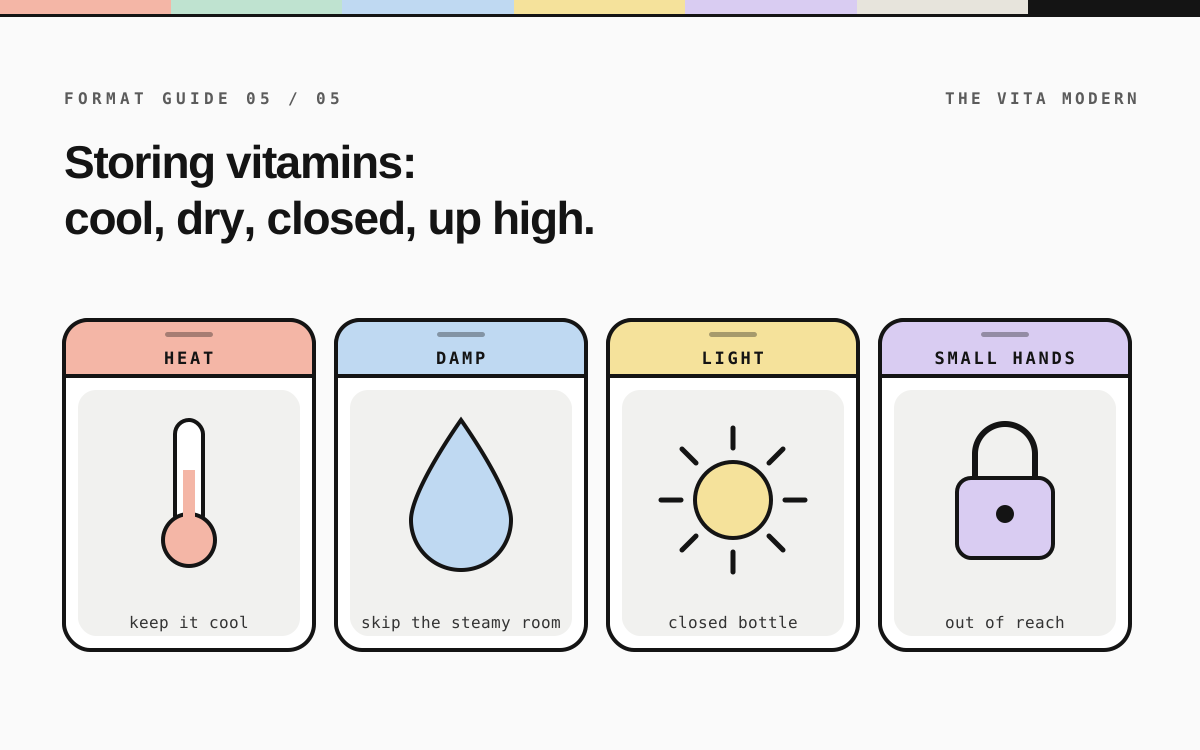
The best storage advice for any vitamin is already printed on its bottle, usually in one short line near the directions. For almost every product we cover, that line asks for the same three things: somewhere cool, somewhere dry, and a closed container kept out of children's reach. The details vary by format, and a few of them are easy to get wrong.
What the labels in our organizer ask for
We copied each storage line from the label images and listings we opened on September 30, 2026. Where we could not find one, we say so.
| Format | Product | Storage line, as printed |
|---|---|---|
| Gummy | Nordic Ultimate Omega Gummy Chews | "Store in a cool, dry place, away from sunlight." |
| Gummy | SmartyPants Adult Multi & Omegas | Not shown in the listing text or images we opened |
| Capsule | NOW Vitamin D-3 & K-2 | "Store in a cool, dry place after opening." |
| Capsule | Thorne Basic Nutrients 2/Day | Not shown in the listing text or images we opened |
| Tablet | Nature Made Multi with Iron | "Store tightly closed, in a cool, dry place, out of reach of children." |
| Tablet | Centrum Adults | "Keep bottle tightly closed." |
| Tablet | Garden of Life Organics Women's Once Daily | Not visible in the label images we could read; the listing's safety text says "Store in a cool, dry place." |
| Tablet | Jarrow Methyl B-12 chewable | "Store in a cool, dry place." |
| Softgel | Nordic Naturals Ultimate Omega | "Store in a cool, dry place, away from sunlight." |
| Liquid | Carlson Super Daily D3 | "Store bottle upright at room temperature." |
| Powder | NOW Vitamin C Crystals | "Store in a cool, dry place after opening." |
Nobody here asks for the refrigerator, and nobody gives a numeric temperature. "Cool" and "room temperature" are as specific as these labels get, so the practical reading is: not hot, not damp, not in the sun. If a product you own does say to refrigerate, follow that label over anything general.
Your bottle's own storage line beats any rule of thumb, including ours. Read it once when you open the bottle.
Heat and humidity: why the bathroom is a poor fit
"Dry" appears on almost every line in the table, and a bathroom cabinet is the room where steam from the shower collects every day. A kitchen shelf beside the stove or kettle, or a car in summer, has the same problem with heat. A dresser drawer or a high kitchen cupboard away from appliances usually fits "cool, dry" better.
Format changes how much this matters. Gummies are built on gelatin or pectin (SmartyPants lists both; the Nordic chews use fish gelatin), and softgels have a gelatin shell, so they are the formats you would least want to leave somewhere warm. Powders such as the NOW vitamin C crystals carry "dry" in their storage line too, which in practice means a tight lid and a dry scoop every time. None of the listings we read gives a heat limit, so we are not inventing one; the labels' own word is "cool."
Light, closed caps and the original bottle
Both Nordic Naturals labels add "away from sunlight." Light sensitivity is best documented for vitamin B12: a 2022 review of B12 stability (Temova Rakuša and colleagues, Molecules) reports that all forms of B12 break down in light, methylcobalamin especially, and cites a study in which commercial methylcobalamin tablets and capsules lost 5% to 31% of their B12 after 20 days of light exposure in their original packaging, and more once opened. MedlinePlus makes a similar point about vitamin C in food, noting that exposure to light can reduce vitamin C content.
The simple habit that covers light, air and moisture at once is to keep each product in its own bottle with the cap turned until it clicks. That also matches safety advice: Up and Away, a medicine-safety campaign run by PROTECT and first created in partnership with the CDC, recommends keeping medicines and supplements in their original child-resistant containers and notes that many pill organizers are not child-resistant. We like a weekly organizer as a way to picture a serving, but if you use one, keep it as far out of reach as the bottles.
Drops and powders once opened
Liquids and powders are the formats you open most often, so they get a line of their own:
- Carlson Super Daily D3 asks for the bottle to be stored upright at room temperature, and not used if the security seal is broken or missing. The listing gives no separate shelf life after opening; use the date on the bottle.
- NOW Vitamin C Crystals is sold by weight, not volume (the label says so), and asks for cool, dry storage after opening. Keep the scoop or spoon dry and the lid tight between uses.
- NOW Vitamin D-3 & K-2 uses the same "after opening" wording on its capsules.
Best-by dates and tamper seals
Most bottles carry a lot number and a date stamped in a printed box. On the Jarrow bottle the box reads "Lot #. Best Used Before:"; on Nature Made it reads "Lot:" and "Exp:". The listings we read do not explain what happens to a product after that date, so we won't guess; the date is the manufacturer's own limit, and storage that ignores the label shortens the odds of reaching it in good shape.
Nearly every label also includes a seal warning: "Do not use if seal under cap is broken or missing" (Nature Made), "Do not take if tamper-evident seal is broken or missing" (Nordic Naturals). If the seal is gone when the package arrives, contact the seller before using it.
Children, iron and pets
Every storage decision comes after this one. Up and Away reports that about 35,000 young children are brought to emergency rooms each year after getting into medicines left within reach, and it specifically names vitamins and supplements "especially those in gummy form."
Iron is the reason for the strongest warning on the shelf. Federal rules require tablets and capsules that contain iron to carry a boxed statement (21 CFR 101.17(e)): "Accidental overdose of iron-containing products is a leading cause of fatal poisoning in children under 6. Keep this product out of reach of children. In case of accidental overdose, call a doctor or poison control center immediately." Centrum and Nature Made both print it. MedlinePlus explains that iron overdose is particularly dangerous for children and can be severe if a child eats adult multivitamins. Poison Control adds two practical points: close the child-resistant package tightly after each use, and store iron-containing products out of both reach and sight, because given enough time toddlers can open child-resistant caps.
Pets need a thought too. The Nordic gummy chews carry a "Not for pets" mark, and the FDA warns that xylitol, one of their sweeteners and also the first other ingredient in the Jarrow chewable, can be dangerous for dogs.
Getting rid of old or unwanted vitamins
The FDA's disposal guidance is written for medicines rather than supplements, but it is the clearest government advice available and it fits vitamins well. The best option is a drug take-back location or a prepaid mail-back envelope; many pharmacies have drop-off kiosks. If neither is available, the FDA describes a household-trash method:
Take the contents out of the bottle
Mix them with something unappealing, such as used coffee grounds, dirt or cat litter, so children and pets are less likely to be tempted.
Seal the mixture
Put it in a resealable bag, an empty can or another container that closes, so nothing leaks or spills.
Put it in the household trash
Only the sealed container goes in the bin.
Remove your details from the bottle
Scratch out any personal information on the label, then throw the empty packaging away.
- Read the storage line when you open a new bottle.
- Keep bottles out of the bathroom and away from the stove and sunny windows.
- Cap closed until it clicks; original bottle, not a loose dish.
- Up high and out of sight, especially gummies and anything with iron.
- Check the best-by date and the seal before the first dose.
Call Poison Help at 1-800-222-1222 right away, even if you are not sure, or use the online tool at poisonhelp.org. Keep the bottle with you so you can read the label to the specialist. For anything else about how a supplement fits with your health or medicines, ask a clinician or pharmacist.
Sources
- Electronic Code of Federal Regulations. 21 CFR 101.17(e), warning statement required for iron-containing dietary supplements. link
- MedlinePlus (U.S. National Library of Medicine). Iron overdose. Reviewed 10/14/2025. link
- Poison Control (National Capital Poison Center). Iron poisoning overview and storage advice. link
- Up and Away (an initiative of PROTECT, created in partnership with the CDC). Safe storage of medicines, vitamins and supplements. link
- U.S. Food and Drug Administration. Where and how to dispose of unused medicines (content current as of 04/16/2025). link
- U.S. Food and Drug Administration. Consumer update on xylitol and dogs (content current as of 12/17/2025). link
- Temova Rakuša Ž, Roškar R, Hickey N, Geremia S. Vitamin B12 in foods, food supplements, and medicines: a review of its role and properties with a focus on its stability. Molecules. 2022;28(1):240. PMID: 36615431. link
- MedlinePlus. Vitamin C (light exposure and vitamin C content of foods). Reviewed 1/21/2025. link
- Amazon listings and label images opened Sep 30, 2026 (storage lines, seal warnings and date boxes): Nordic Naturals Ultimate Omega Gummy Chews (B09RQKTMFT), SmartyPants Adult Multi & Omegas (B0F2KG28P5), NOW Vitamin D-3 & K-2 (B0019QT9LA), Thorne Basic Nutrients 2/Day (B00FOTMGTU), Nature Made Multi with Iron (B00YMSLT88), Centrum Adults (B09BVYY7XR), Garden of Life Organics Women's Once Daily (B00K5NEMJM), Jarrow Methyl B-12 (B002FJW3ZY), Nordic Naturals Ultimate Omega softgels (B002CQU54Q), Carlson Super Daily D3 (B0062QD5LM), NOW Vitamin C Crystals (B00028LX1U). As an Amazon Associate we earn from qualifying purchases.
This article is educational and is not medical advice. Statements about dietary supplements have not been evaluated by the Food and Drug Administration. Ask a qualified clinician or pharmacist before starting or changing a supplement, especially if you have an existing condition or take medication.